
Rice County Arrest Records and Court Charges
Rice County arrest records begin with the arrest, booking, and detention process. The public jail roster can show a person's name, booking date, front mugshot, and booking charges. Those booking charges are useful, but they are not the same as the final court charge record. A booking entry can be based on the officer's arrest basis, a warrant, a probation violation, or another custody reason. The court charge record starts later, when the Rice County Attorney files a complaint or information in District Court, or when a municipal prosecutor files a city complaint in municipal court.
The Rice County District Court handles felony cases and misdemeanors not under municipal jurisdiction. The Rice County Attorney, Remington Dalke, is the main prosecutor for State of Kansas criminal cases in the county, including felony cases, many misdemeanor and traffic prosecutions, drug offenses, theft, juvenile matters, child in need of care matters, and care and treatment cases. For jail custody and booking detail, use the Rice County inmate records route. For the full court file, pleas, disposition, sentence, and probation terms, use the Rice County criminal court records route.
The Rice County Sheriff's Office additional information page documents sheriff report and records channels that may help when the arrest-side record is needed. That source is most useful for sheriff records, not the final court charge list.
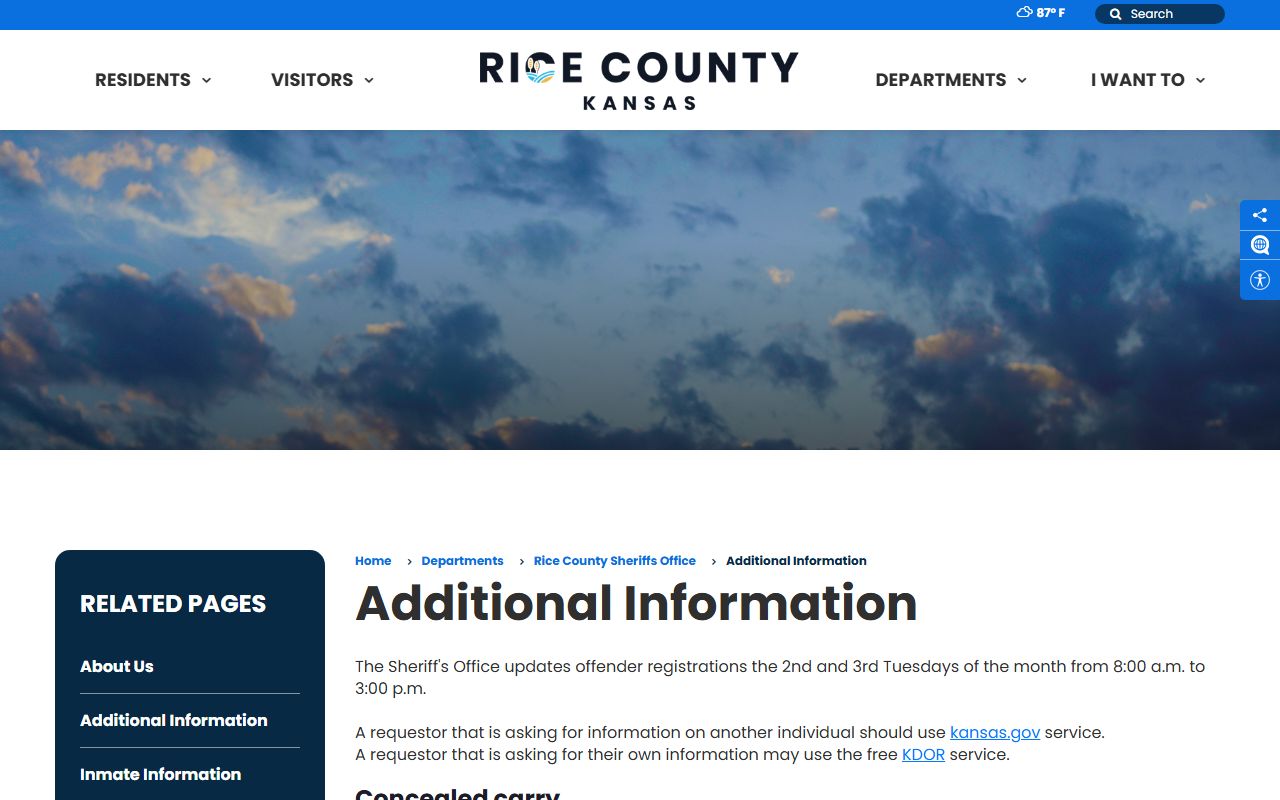
That distinction matters because a report, booking entry, and filed criminal case may each use different words, dates, and charge status notes.
Search Rice County Arrest Records and Charges
Start with the record type you need. If the goal is current custody, the Rice County jail roster is the direct source. If the goal is the charge filed after arrest, start with Kansas Case Search and choose Rice County when the county is known. The Rice County District Court also links to public court access from its local court page, and Kansas court guidance says public case records may be searched online where available or at courthouse terminals. Older files, paper records, and document-level access may require the Rice County District Court clerk at 620.257.2383.
- Check the arrest-side record first if the person is in current Rice County custody or was recently booked.
- Search Kansas Case Search by name or case number for a District Court case filed after the arrest.
- Open the case result and read the charge list, case type, docket entries, and hearing history where public.
- Confirm whether the charge is pending, amended, dismissed, diverted, or tied to a conviction before treating it as an outcome.
- Call District Court if the public search omits an older, paper, restricted, or document-level record.
City police citations and city ordinance cases can follow a different path. The Rice County Attorney diversion page routes Lyons Police Department traffic complaints to Lyons Municipal Court at 620.257.2320 or ccourt@lyonsks.org, and it says the County Attorney does not manage municipal schedules, tickets, or diversion for Lyons, Sterling, Little River, or Chase. That same court split can affect some charge searches after an arrest tied to a municipal matter.
Rice County Charging Documents
A Rice County court charge record is built from a charging document. In Kansas District Court practice, criminal files can include a complaint or information, probable cause materials where public, bond orders, arraignment entries, pleas, motions, diversion orders, sentencing, probation terms, restitution, jail credit, and revocation filings. The term "complaint" is also used in the research glossary as a charging or civil pleading that starts a case. An "information" is the prosecutor's formal charging document.
| Document | Who Usually Files It | How It Fits Rice County Charge Records |
|---|---|---|
| Complaint | Prosecutor or authorized charging authority | Can start a criminal case and list the charge, statute, date, defendant, and basic accusation. |
| Information | County Attorney | Formal prosecutor filing in District Court, often used for State of Kansas charges after review. |
| Indictment | Grand jury | Possible in serious matters, but the Rice research mainly documents complaint and information practice for local charge records. |
The Kansas Department of Corrections is not the charging office for Rice County. It becomes relevant when a person is later in state prison custody or supervision, which is separate from the Rice County arrest and District Court filing path.

Use KDOC only after the local court and jail record questions are separated from state custody or supervision questions.
Rice County Charge Status Terms
Charges can change after filing. A first booking charge may not match the later formal charge. A formal court charge may be amended, reduced, dismissed, diverted, or resolved by plea or trial. Rice County District Court docket entries may show complaint filed, arraignment, plea, motion filed, order entered, hearing scheduled, continuance, diversion agreement, sentencing, probation violation, warrant issued or recalled, judgment, and satisfaction. Read the docket entries with the charge list, not in isolation.
| Status | What It Means | Why It Matters |
|---|---|---|
| Pending | The accusation is open and has not reached final disposition. | It is not a conviction. |
| Amended or reduced | The filed charge changed after prosecutor review, plea talks, or court action. | The first charge may no longer be the active charge. |
| Diversion | The defendant agrees to conditions that can lead to dismissal or avoidance of conviction if completed. | The Rice County Attorney accepts diversion applications for eligible matters. |
| Dismissed | The charge was ended by court or prosecutor action. | The arrest or case may still appear unless sealed or expunged. |
| Convicted | The charge resulted in a guilty plea, no contest plea, or verdict. | Sentencing, probation, restitution, or jail credit may follow. |
Rice County Charges vs Convictions
A charge is an accusation. A conviction is an outcome. Rice County arrest records can show booking charges before the County Attorney has filed a court case. A District Court record can then show formal charges, court dates, pleas, motions, and final disposition. The record should be read from start to finish because an early charge line can be replaced by an amended charge, dismissed through diversion, or resolved on a different count.
| Point of Comparison | Charge | Conviction |
|---|---|---|
| Record stage | Accusation after arrest or prosecutor filing. | Final result after plea, verdict, or judgment. |
| Where it appears | Jail roster, complaint, information, docket entries. | Disposition, sentencing, probation, restitution, and judgment entries. |
| What it proves | That a charge was alleged or filed. | That the court reached a guilty or no contest outcome. |
| Public access limits | May be restricted if juvenile, sealed, expunged, or investigative. | May be restricted or later expunged under Kansas law if eligible. |
For broader criminal history, the KBI registered offender website is limited to offender registration status under Kansas law. It is not an all-purpose active charge search.
Rice County Charge Codes
The Rice County jail roster displays charges with code and description lines. The research example shows a format such as a code followed by the charge description and adult arrest status, including probation violation wording. Multiple charges can appear on separate lines, and some entries include count notes. A single arrest can therefore produce more than one booking charge, and not every line will become the same formal court count.
The KDOC locating guidance explains how state custody information can be checked through KASPER, but that state locator is separate from Rice County booking charges. Use it only when the person may have moved into KDOC custody or supervision after the county case.

Charge-code language should be matched to the Rice County court case before relying on it as the formal filed count.
Restricted Rice County Charge Records
Kansas access rules do not make every charge detail public. Juvenile offender, child in need of care, adoption, mental health, sealed, and expunged records are restricted. Public records should also redact Social Security numbers, driver license numbers, financial account numbers, protected addresses, minor identities, and medical information. Under K.S.A. 45-215 and related Kansas Open Records Act provisions, public access is the baseline for many agency records, but K.S.A. 45-221 lists exemptions and restricted categories.
K.S.A. 21-6614 allows petitions for expungement of certain convictions, arrest records, and diversion agreements after waiting periods and other statutory conditions. The petition is filed in the court tied to the conviction, diversion, or arrest record. Expungement can limit public access, but courts, law enforcement, licensing bodies, and authorized systems may retain access for specific legal purposes.
The Federal Bureau of Prisons inmate locator is a separate federal custody tool, not a Rice County court charge search.
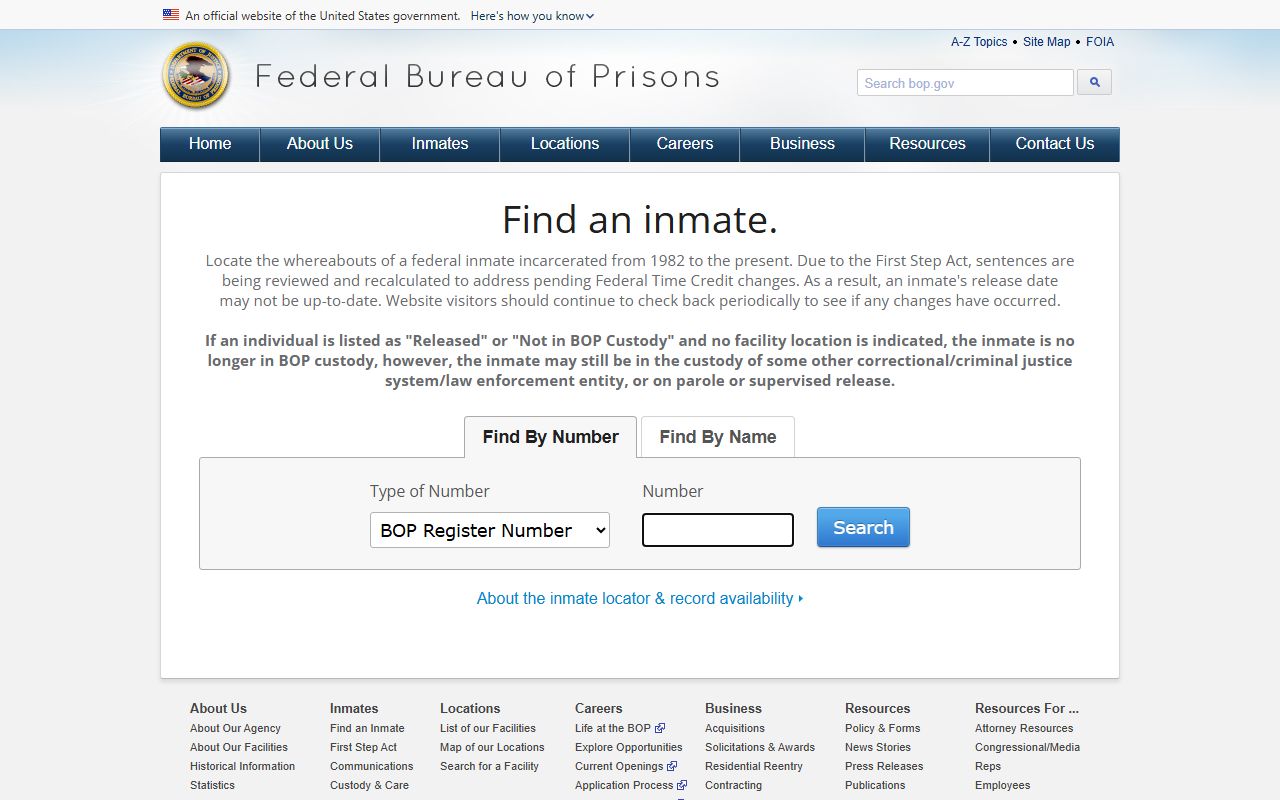
Federal custody, Kansas state custody, Rice County booking records, and District Court charge records should be checked through the correct source for each system.
Important: A public charge record is not a consumer report and should not be used for FCRA-regulated screening.